

For North American readers unfamiliar with BBC Introducing, imagine a publicly funded pipeline connecting local radio, unsigned artists, and some of the country’s biggest festival stages. Musicians could upload their music without needing a label, manager or well-placed industry contact. Regional broadcasters identified promising acts, played them on the radio and occasionally helped move them onto national platforms.
For nearly two decades, one of those platforms was Reading & Leeds — two of the UK’s most influential live music festivals that feature performances by artists culled directly from the BBC Introducing selections. But his year, that stage disappeared.
Festival Republic removed the BBC Introducing stage from Reading & Leeds after 18 years and replaced it with the Canopy, described as a new home for emerging artists. The organizer’s explanation sounds reasonable: limiting the former stage to artists selected by BBC Introducing excluded other developing acts, while the new format allows the festival to book from a wider pool.
The problem arose when people saw who had been booked.
Welcome to the “Nepo Baby" Era
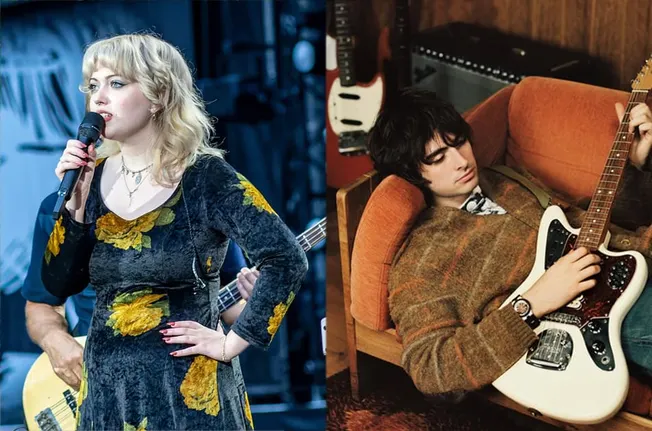
The Canopy lineup included Violet Grohl, daughter of Dave Grohl; Cruz Beckham, son of David and Victoria Beckham; and Villanelle, fronted by Liam Gallagher’s son Gene Gallagher. December 10, a boy band formed through Simon Cowell’s Netflix series The Next Act and already signed to a label, also appeared.
That concentration of famous connections earned the Canopy an unofficial, and fairly brutal, nickname: the “Nepo Baby Stage.”
Of course, the stage is open to emerging artists “from all backgrounds and at different stages of development,” whether independent, signed, or entering the industry through different routes. And famous parents do not automatically make an artist undeserving. Violet Grohl, Cruz Beckham, and Gene Gallagher still have to create music people "want to hear."
But while folks are voicing that these artists have had an easier route to stardom than the rest, the controversy is not really about celebrity, it's more centered on what has disappeared in order to make room for them.
Being Without Part of Its Headliner Pipeline
BBC Introducing was more than another small festival stage. It was connective tissue for an industry typically quite amenable to its artist development chain. The program combined local tastemakers, public radio, and live opportunities into a paved route through the music industry.
An artist did not need millions of streams or a viral campaign to enter the system the BBC had built, just some talent and the support of someone within the BBC’s regional network that heard potential in it. That process had an extraordinary track record. Ed Sheeran, Charli xcx, The 1975, Sam Fender, Florence + The Machine, Raye and Little Simz all received early support from BBC Introducing.
At least 70% of the UK artists booked at Reading & Leeds this year had been supported by the initiative earlier in their careers, including four of the 2026 festival’s headliners. This is where the program's removal gets worrisome. It's cutting out part of its own pipeline to success on a global stage.

+Read more: "Nick Cave’s Genius — How His Hometown Show Used the 'Entire' Town."
Discovery Is Not "Really" Development
The music business loves to talk about artist discovery. Every platform wants to be where fans “discover” their next favorite artist. But discovery is all but entirely a data-driven phenomenon these days. This artist is actually currently testing this theory.
Development needs more from its industry. Developing artists need local rooms in which to become better performers, opportunities to play for unfamiliar audiences, and credible stages that tell agents, promoters, and future fans to take them seriously.
They need somewhere between the 100-capacity club and the main festival field to learn how to become a headliner. BBC Introducing helped build that bridge, and its removal will inevitably leave a rift in the access pathway to bigger, better-produced stage spaces.
+Read more: "A Clear Example Why Festivals Should Be on Bandsintown Pro"
Why Should We Care?
Well, it's not as though we don't have our own share of "nepo babies" in the creative industries here. But what's interesting about this story is the way this is treated as a sustainability issue. Festivals, nowadays, are nowhere near a guarantee year after year.
And while there is no precise North American equivalent to BBC Introducing — college radio, local promoters, showcase festivals, and emerging-artist programs each play a partial role but just not as one coordinated national system — festivals everywhere face the same challenge to bring artists arriving with a built-in audience.
Those curatorial choices reduce risk, which in turn makes it nearly impossible for unknown or emerging artists to be given those platforms to grow.
Ironically, BBC Introducing itself has begun expanding into the United States through partnerships with college radio. Unfortunately, its underlying idea — that local broadcasters can find artists whom commercial algorithms and national tastemakers have missed — may be arriving here just as one of its most valuable UK stages disappears.