

By Edward Ginis, Co-Founder of OpenPlay
I have spent twenty years building infrastructure for the music business. In all that time the industry's ambition has run ahead of its plumbing. We digitized distribution and called it "transformation."
But, we never finished the harder job: building the systems that manage rights, metadata and money at the scale we now operate at. That gap is now the industry's defining problem. Here's why, and what to do about it.
We have outgrown our own infrastructure
Goldman Sachs expects the global music industry to pass $150 billion by 2030. Streaming already accounts for more than 70% of recorded music revenue, according to IFPI. Independent releases, user-generated content, gaming, creator platforms and sync each add a new revenue line. Each also adds a new schema, a new reporting format, a new set of identifiers and a new place for value to leak.
Every dollar of growth arrives with a tax of operational complexity, and we pay that tax by hand.
Walk through any label, distributor or publisher and you will find the same picture. Rights live in one system, metadata in another, royalties in a third, and the truth in someone's inbox. Splits are confirmed by email. Statements arrive as PDFs. Reconciliation happens in a spreadsheet built by someone who left two years ago. The same recording is keyed in by the label, the distributor, the publisher, the society and the DSP, and no two versions agree.
The cost is not abstract. Bad data means unmatched royalties sitting in suspense, writers paid late or not at all, and legal exposure when attribution is wrong. It also means the most talented people in the building spend their days cleaning data instead of finding and growing artists.
The AI conversation is aimed at the wrong problem
Most AI discussion in music is about generation and copyright. Those debates matter, but they are not where the money leaks. The practical opportunity is agentic AI: networks of specialized, autonomous agents that do the operational work the industry has never been able to staff.
An agent is not a chatbot. It is software with a job, a set of tools and the authority to act within limits. One agent watches for metadata conflicts across sources and resolves them against a trusted authority. Another matches unmatched royalty lines to works and recordings and files the claims. Another validates a registration before it goes out, catches a missing IPI and routes the fix. Another reads a contract, extracts the terms and checks that the statement math honors them.
Each runs continuously. Each hands off to the next. Together they form an operational layer that never sleeps and never keys the same ISRC twice.
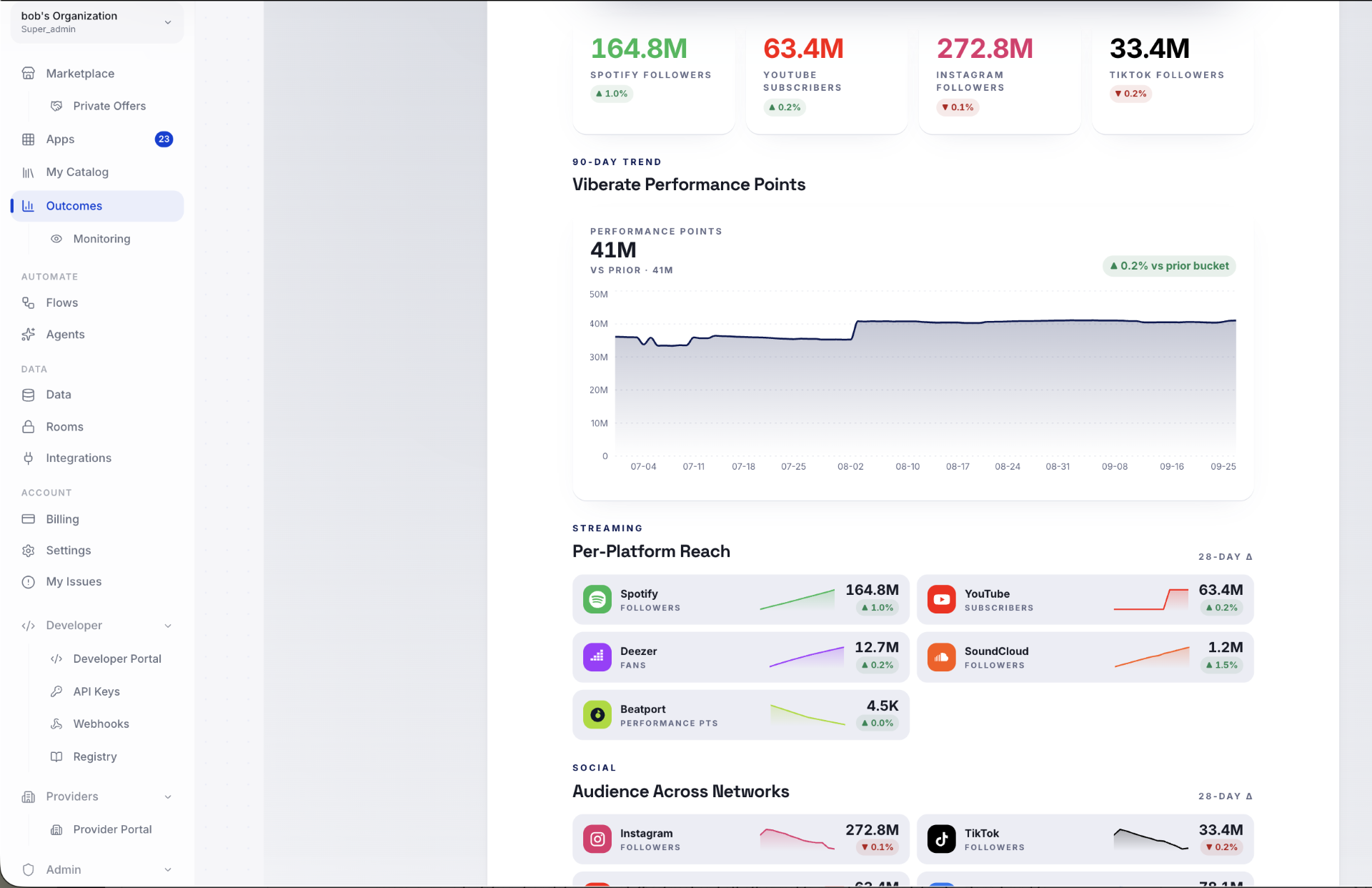
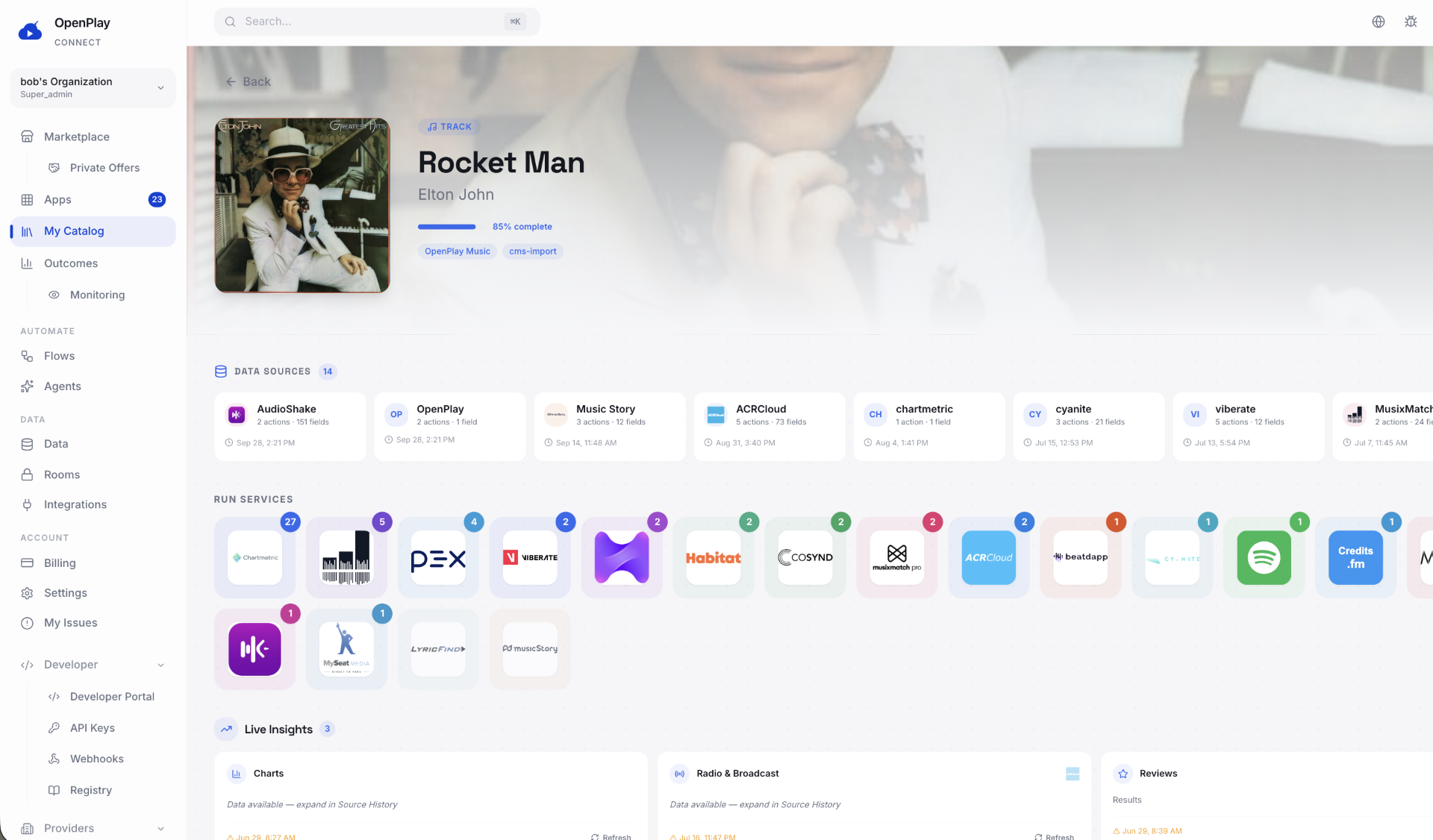
At OpenPlay, we were building this before it had a name. Our platform sits under thousands of music companies, so we see the data problem at full scale. This year we built agents directly into our core platforms. Verse, our publishing administration platform, ships with agents for registration validation, split reconciliation and statement ingestion. Pulse does the same for recorded music and distribution. OpenPlay Connect links those agents to outside sources and platforms so an agent resolving a conflict can go verify the answer rather than guess.
This is the first generation. The interesting version arrives when agents at a publisher, a distributor and a society start talking to each other.
+Read more: "'Human-First' Needs More Than Just a Checkbox"
What agent-led infrastructure looks like
An agent-led industry is not one giant AI. It is a network. Agents live where the data lives, speak a common protocol, carry provenance for every change and escalate to a person when confidence drops. A label's agent asks a publisher's agent to confirm a split. A society's agent flags a duplicate work to the registrant's agent. The transaction is logged, sourced and reversible.
Four foundations make that network trustworthy.
- Trusted data. Agents amplify whatever they are fed. Every fact must carry its source and its authority. Our own approach weights each claim by who made it and how reliable they have proven to be, so conflicts resolve on evidence rather than on which record arrived last.
- Interoperable systems. Agents cannot fix silos by working inside them. Open APIs, standard identifiers and shared protocols are the roads agents drive on. DDEX and CWR did the hard work years ago. Agents finally make that work pay off.
- Automated workflows. The goal is not a faster spreadsheet. It is no spreadsheet. Any process that runs on a schedule, follows rules and touches structured data belongs to an agent.
- Human oversight. Autonomy without accountability is a liability. Every agent action should be explainable, auditable and subject to approval thresholds the company sets. People move from doing the work to governing it. That is a promotion, not a layoff.
+Read more: "You Can Own Your Masters and Still Lose Control of Your Catalog"
The advantage goes to whoever moves first
The labels, distributors, and publishers that get this right will pay faster, sign smarter and scale without adding headcount. Those that wait will keep paying the complexity tax, and the tax rises with every new platform that launches.
For once the technology is ahead of the industry, and the industry's problem is operational rather than creative. That is good news. Operational problems get solved. We have been waiting a long time for a music economy that runs at the speed of the music. Agents are how we get there, and this is just the beginning.
With over 15 years of experience in the finance, music, and technology arenas, Edward Ginis has built a reputation for developing effective legacy technology modernization strategies, incubating new business models, and successfully managing large-scale global software system implementations. Ginis co-founded OpenPlay in 2013 after serving as the CTO of Concord Music Group.