

By Henry Donahue, Executive Director of Save The Music
As we start the school year, it’s time for a reminder that funding for music education isn’t charity. It’s an investment in a thriving future music industry.
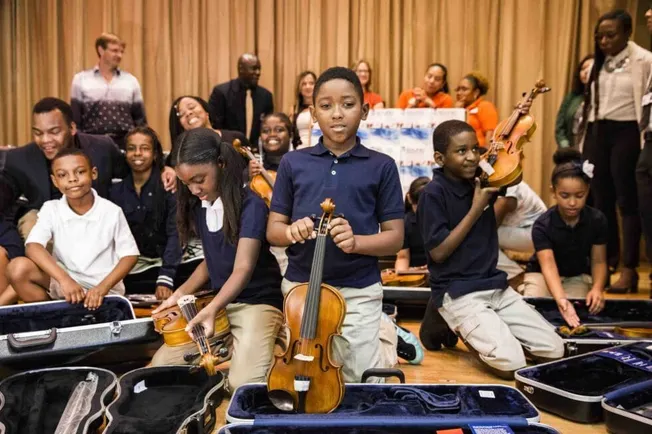
Based on my ten years as the Executive Director of Save The Music, the leading national non profit for K-12 music education, I can report that the pipeline that develops future artists, songwriters, engineers and other music workers has never been more at risk.
Tomorrow’s artists and audiences demand that we care about what is happening in public school music programs right now.
“We need to lay off the music teachers. Can we send the instruments back?”
This was a request I received this past spring from a California school district where Save The Music has done years of work helping to rebuild its school music programs.
This district is not alone. Across the country, government funding cuts, declining enrolments, and state policy shifts toward private schools have put public school administrators under tremendous budget pressure. Despite decades of research showing that music education drives better attendance, test scores and graduation rates, many of these school districts are again cutting music classes from their schedules and firing music teachers.
This isn’t a side issue for the music industry. The music that creates our business did not happen by accident. It was the product of a sustained, systemic commitment to teaching young people how to play, sing, collaborate, and create.
Video courtesy of Save The Music.
+Read more: "Why the Levitt Foundation Model Should Not Be an Outlier"
American music education is the reason we have a music business today.
Pop, R&B, Hip-Hop, rock, gospel, country, jazz, house, and techno were all built on the culturally rich foundation of American music education. In addition to learning music in school, Americans make music every day at home, in church, in restaurants and bars, and at sporting events.
American genres power more than half of the $100 billion+ global music business.
New Orleans invented modern music. So did Memphis, Detroit, New York City, Los Angeles, Miami, Nashville, Chicago, Austin, Dayton, and countless other American communities. Dayton, Ohio became the “Funk Capital of the World” in the 1970s by aggressively funding public school music education, fueling a competitive marching band culture and producing amazing horn players. And then when they started their own groups, there were places for young people to perform, radio stations that played their records and a path from Dayton to national and global audiences.
Today much of that systemic support is either at risk or no longer exists.
The case for investment starts with the social and emotional benefits and then leads to music technology, workforce development and talent development.
Music students are more motivated to come to school, and when they connect their passion for music to their schoolwork, they’re learning a set of valuable skills including close listening, collaboration, and managing a project from start to finish.
Save The Music’s fastest growing program is our J Dilla Music Tech grant to middle schools and high schools. When we started in 2018, this was relatively new territory for high schools. Today, music tech is growing quickly — in high schools and even middle schools — and many of our early students have gone on to study music and production in college, moving from classroom beat-making into the same creative and technical skills the industry now depends on.

+Read more: "School of Rock AllStars' 34-Date Tour Supports Music Education Access"
When more students have music in school, more of them find their way to community based programs, higher education, music careers, and other parts of the music ecosystem.
Unfortunately, we’re seeing an unprecedented erosion of the school music infrastructure: classroom programs, arts-specific education funding, and career pathways for music teachers.
Fewer than half of the states have an arts requirement for high school graduation, and in many states the existing requirements are being replaced by career and technical training alternatives.
According to the Arts Education Data Project, over 4 million students nationwide don’t have the opportunity to take an in-school music class. And for the first time in my tenure at Save The Music, the gap seems to be widening, as federal, state, and local officials are accelerating funding cuts for public education and the arts.
If you work in music: Think of public music education not as charity, but as an investment in the future of the industry, and the time to make that investment is now.
Music companies need to be showing up in the local, state, and federal workforce development conversations in the state houses and school board meetings where decisions are being made.
Henry Donahue has been the Executive Director of Save The Music since 2016. Save The Music partners with public school districts nationwide to jump start their music education programs, so that students, schools, and communities can reach their full potential through the power of making music. Since its founding in 1997, Save The Music has started over 2,500 new school music programs.