


By Steve Canfield of Song Cage
*This piece is based on an earlier published article on Song Cage.
On July 30, IFPI began applying new chart eligibility principles across the official charts it manages in Latin America, the Middle East, Africa, and Southeast Asia, and started work with its national groups to reach twenty or so more.
A recording made with generative AI now qualifies only if the AI service was authorized and lawful, the track is "substantially human made," and there are no stream or chart manipulation concerns. Eleven record companies, the three majors among them, had put those principles forward the day before.
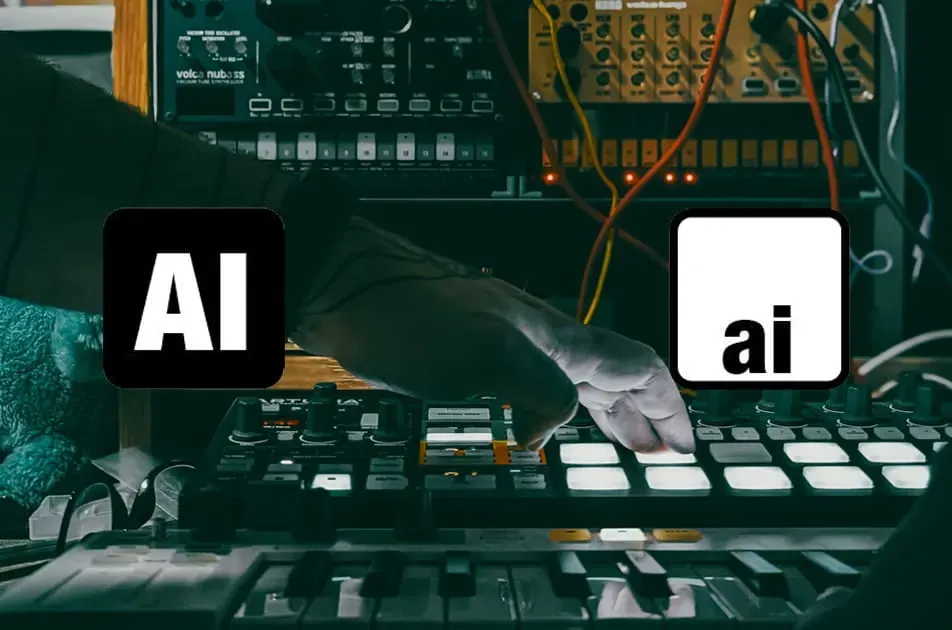
Twenty days earlier, eight organizations covering most of the recorded music business proposed the labels the framework leans on. An uppercase "AI" for a track whose lead vocal, key instrumental or entirety came out of a model. A lowercase "ai" for a human-performed record where a model touched some expressive element.
Read the July 10 announcement to the end and you reach one sentence. The system "does not cover the use of generative AI in lyrics, composition, music videos, or cover art at this point."
That is the entire songwriting stage, placed out of scope in a single clause.
The comfortable reading is that composition was too hard to reach. It was not. Apple Music shipped transparency tags in March with four categories: track, composition, artwork and music video. The composition tag covers AI-generated compositional elements, lyrics included. A major DSP built the field four months before the industry settled on a standard that leaves it out. Given a choice of where to harmonize, the business harmonized to the narrower option.
There is a real reason behind that, and it is not a cynical one.
A performance leaves an acoustic fingerprint. Deezer built a detector for it, and Billboard uses that detector to identify AI tracks on its charts. Composition leaves nothing. There is no spectral signature for a chord progression, and no forensic test that separates a model's second verse from one written at a kitchen table at two in the morning. So the industry standardized the part that can be checked.
The difficulty is that "substantially human made" is now a chart rule, and the question it asks lands squarely in the part nobody can check.
January showed what that looks like in practice. IFPI Sweden barred the AI-artist Jacub's "Jag vet, du ar inte min" from Sverigetopplistan on the grounds that it was mainly AI-generated.
The team behind the track did not argue about the recording. They said it came from:
"A team of human songwriters, producers, and creators... (through) a focused, conscious and human-driven creative process, guided by a clear artistic vision."
Make of that defence what you like. The part worth noticing is where it was pitched. Not at the vocal. At the writing. That is the claim chart compilers now have to accept or reject case by case, with no label, no detector and no agreed definition to work from.
Meanwhile there is already a working rule at the composition stage, and it is nowhere near a sticker. ASCAP, BMI, and SOCAN went to the market together and told writers not to register fully AI works, while partial ones are fine. That line sits at 100 percent. The recording side's line sits at "substantially human." Two thresholds, two systems, nobody reconciling them, and the one with money attached is the registration.
So for anyone writing with these tools, the first disclosure question is not which sticker the track ends up carrying. It is what goes on the registration, and whether every co-writer in the room would describe the session the same way.
Listeners are already sorting themselves. Luminate's July study found 38% of Americans less interested in music made with generative AI against 28% more interested. They will start asking. The labels will tell them who sang it. Nothing in the July frameworks tells them who wrote it, and "at this point" is the industry conceding that this was a decision rather than a limit.
Songwriters have until the standard hardens to say so.
Steve Canfield is a former professional composer and the developer of Song Cage, a songwriting tool built without generative AI.