


By Darryl Ballantyne, Founder/CEO of LyricFind
The music industry’s anxiety around artificial intelligence is understandable.
Artists, songwriters, publishers, and labels have reason to be concerned about generative AI systems that use copyrighted work without permission, flood platforms with low-quality content, and weaken human creativity. Those concerns deserve serious attention, and any use of copyrighted music in AI systems needs clear licensing, transparency, and guardrails.
However, the industry needs to be careful not to treat every AI conversation as the same debate. Some uses can improve the business infrastructure and help existing works earn money, especially for artists.
In lyrics, rights data, translations, synchronization, and metadata workflows, AI can make the music business more efficient in ways that directly benefit the artists and companies behind the songs. I'll prove it.
A Misunderstood Revenue Source
Lyrics are a useful example because the licensing around them is often misunderstood, even though lyric displays generate real revenue for publishers and songwriters. Much like audio streaming, lyric royalties are fundamentally usage-driven, regardless of whether the license is structured per display or as part of a revenue-share model.
The more often lyrics are displayed, the more value flows back to the rightsholders whose songs are being used.
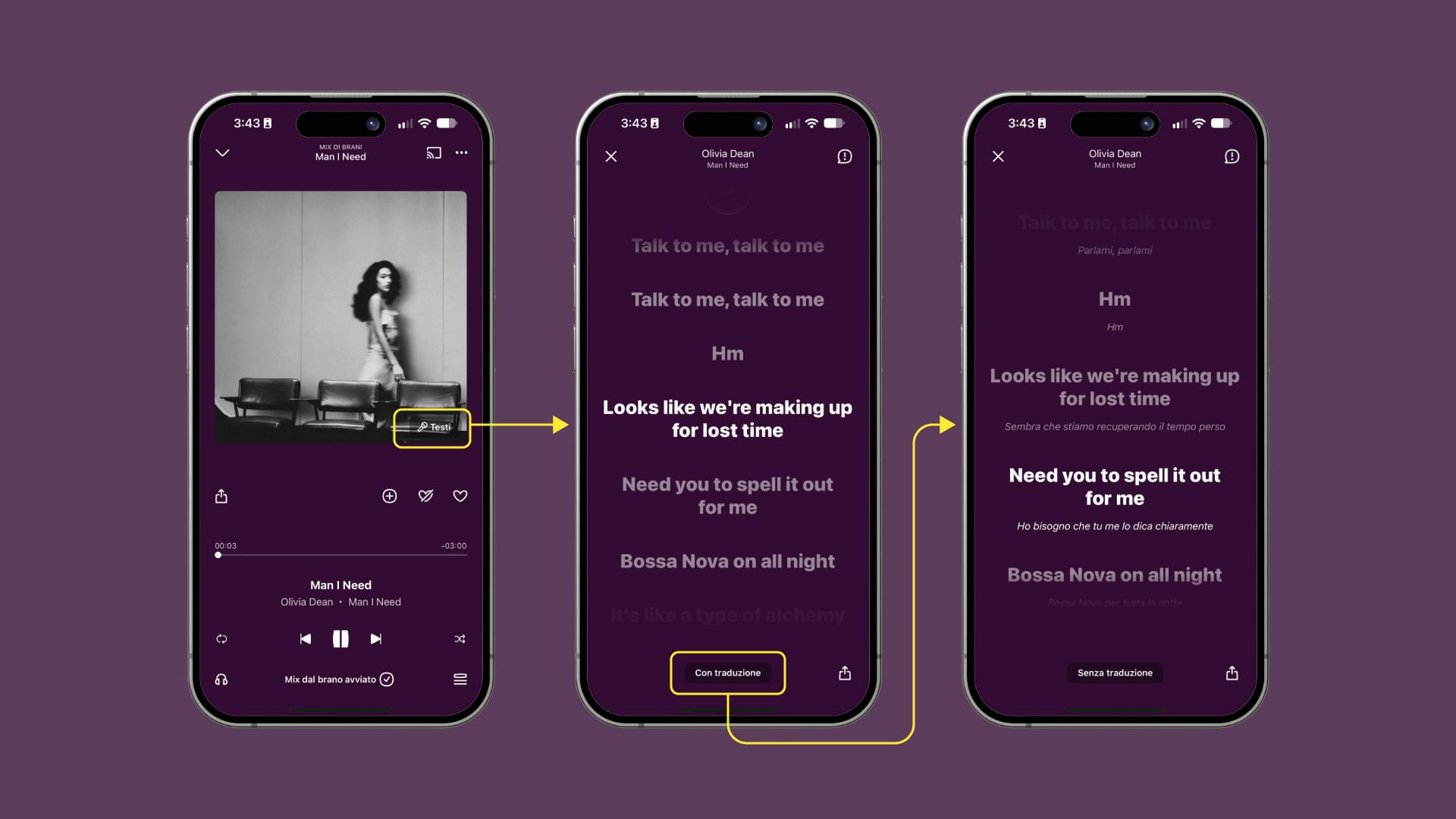
That makes lyric availability a financial issue. When a DSP has lyrics for one song but not the next, or when some songs have synchronized lyrics while others only have static text, the user experience becomes inconsistent and engagement suffers. Fans are less likely to use lyric features when availability feels unpredictable, which in turn gives services fewer reasons to promote them. The result is fewer displays, and less money for rightsholders.
For years, the challenge has been scale. There is an enormous amount of music in the world, with tens of thousands more tracks released every day. Transcribing, synchronizing, translating, and verifying lyric content requires significant human labor. There has always been a break-even point where it did not make financial sense for companies like LyricFind to create lyrics, syncs, or translations for a song manually because the expected usage would not justify the cost.
That has never meant those lyrics have no value, only that manual processing has limited how deep into the catalogue the industry can go.
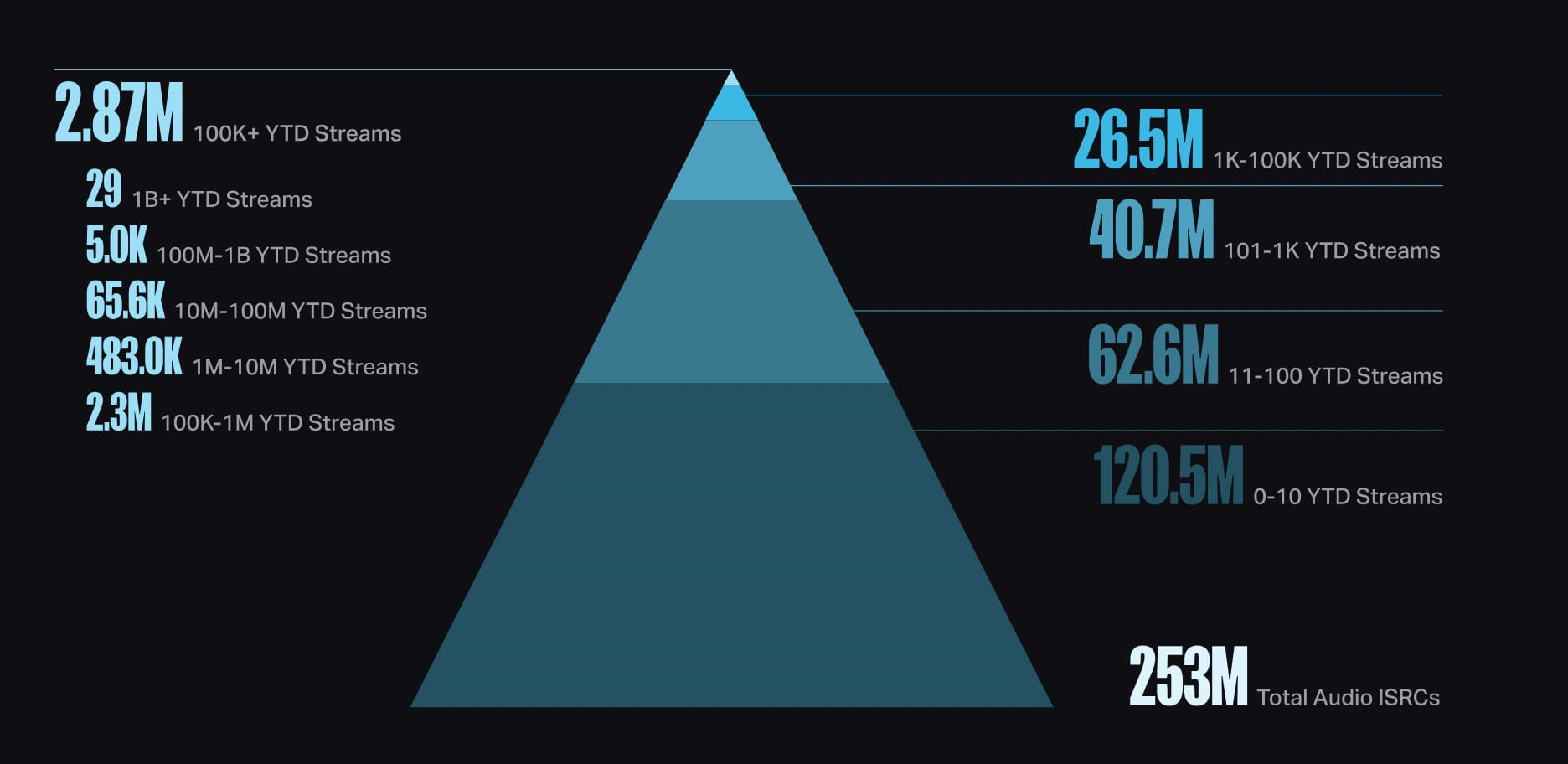
According to Luminate data, there were 253M ISRCs tracked across global streaming activity in 2025, and 120.5M either were not played at all or were played 10 times or less. Nearly 224M of the 253M songs tracked were played less than 1,000 times all year. At the other end, only 29 songs had more than 1B global streams last year, and only 192 songs had between 500M and 1B streams.
Those numbers show both the limits of manual processing and the size of the opportunity. While it will likely continue to be impossible to provide lyrics for every song, expanding the addressable portion of lyrics that can be created can significantly improve the user experience, as well as increase the flow of royalties to artists and rightsholders.
The Effect of AI
AI can change that equation by making the work more efficient, while keeping people at the centre of the process.
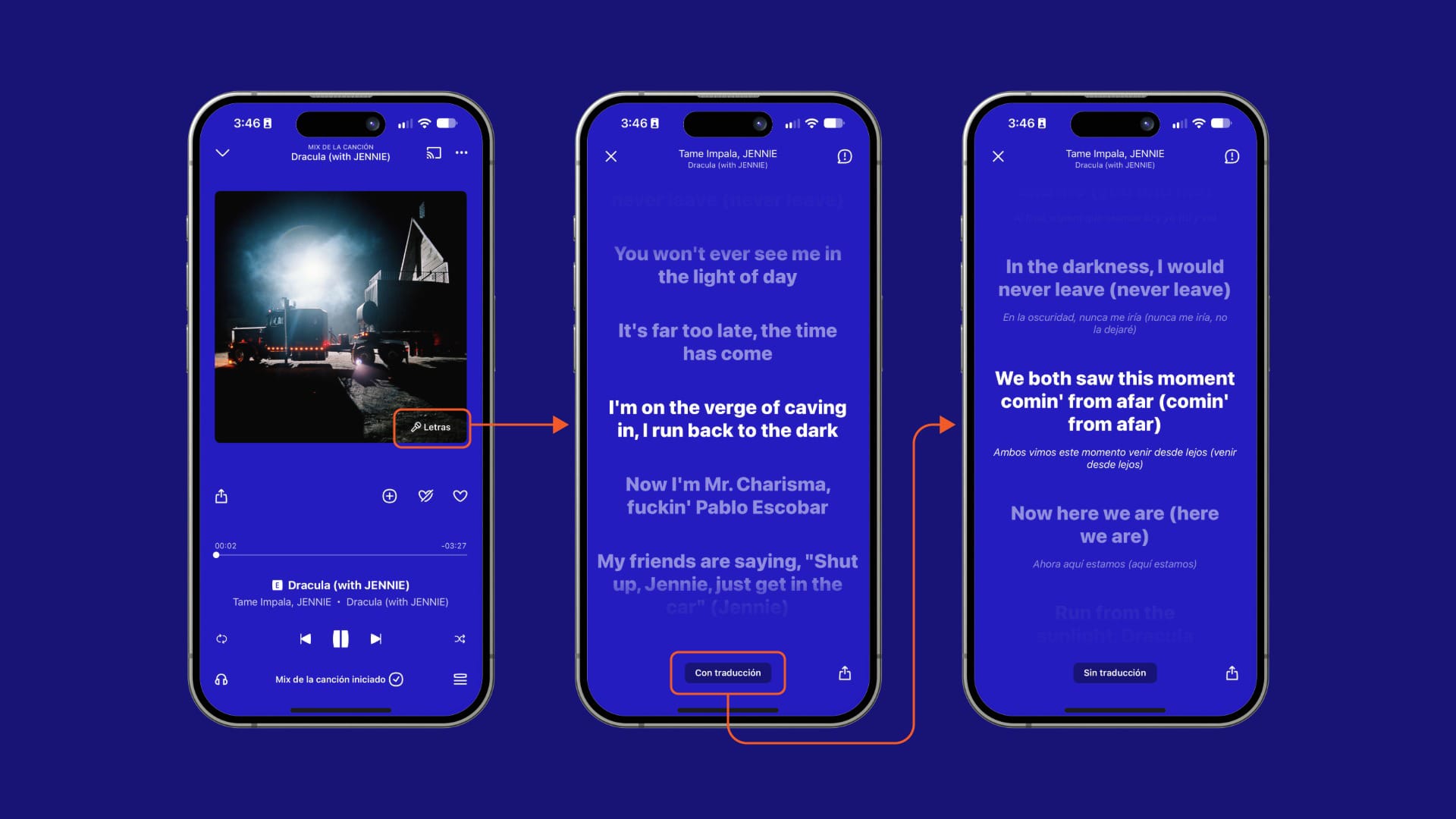
At LyricFind, our ever-evolving content workflow now uses AI at multiple points, with human oversight built in throughout. AI can produce an initial transcription, but the technology is not reliable enough to publish without human verification. Once the lyrics are accurate, AI can generate word-by-word synchronization and translations, which can then be prioritized, reviewed, and corrected by human teams.
The result is a shift in the nature of the work. Instead of spending hours on repetitive manual tasks, skilled content teams can focus more time on accuracy, judgment, corrections, and quality control. If the main cost of creating a lyric asset is human time, making each person three or four times more efficient can dramatically lower the popularity threshold for economically viable content. Songs that previously didn’t have the usage to justify human review can suddenly make sense to process, expanding the addressable catalogue by millions of tracks and creating more opportunities for engagement, displays, and royalty revenue.
For example, 9.6M songs were streamed between 10,000 and 500,000 times in 2025, more than ten times the number that crossed 500,000 streams. Those songs represent over 13% of total global stream volume for the year. Without the efficiencies of AI, those lyrics would likely never be created. With AI, that 13% share becomes addressable, generating royalties for songwriters.
"With AI, that 13% share becomes addressable, generating royalties for songwriters."
That also deepens the value of the people doing the work. When a content team member can process more lyrics in the same amount of time, the return on that person’s labor increases. If a lyric that once cost too much to create manually can now earn back its cost within a reasonable window, it becomes easier to justify staffing up to process more of the catalogue.
While AI can make staff three times as efficient or more, the addressable market of viable content grows even faster, by approximately 700%. This means that it actually makes sense to double the size of our human team, to maximize return on investment.
Translations are especially important here as well. Music is global, and a song can travel much further when listeners can understand it. Licensed and responsibly reviewed lyric translations can help songs reach more fans while increasing the value of existing copyrights.
The conversation around jobs also deserves more nuance, because AI is often discussed as if efficiency automatically means fewer people. In rights and metadata infrastructure, the amount of work is effectively endless, and even a 99% accurate AI system applied to 100 million song lyrics would still leave at least 1 million errors. Content teams become more integral to quality control as their work shifts toward managing corrections, prioritizing work, and reviewing difficult cases.
Moving Forward Responsibly
The music industry should remain vigilant about AI systems that exploit creative work without permission, while also recognizing practical uses that can strengthen licensed infrastructure. AI will not solve metadata gaps, rights complexity, or under-monetized catalogue by itself, and human accountability remains essential.
Our publishing partners have understood this distinction from the start, and their support for using AI in these workflows has been a key part of getting it right. Lyrics are one often-overlooked area where AI can help put more money in rightsholders’ hands, improve the fan experience, and make the case for more investment in the people doing the work.
Darryl Ballantyne is the Founder and CEO of LyricFind, a global leader in lyric licensing and data solutions. He founded the company in 2004 with Mohamed Moutadayne and Chris Book, and helped pioneer the licensed digital lyrics space by securing the first-ever lyric licensing deal with EMI Music Publishing, now part of Sony Music Publishing, in 2005.