

Recently, Spotify and Universal Music Group announced plans for a paid AI feature that would let Premium subscribers create covers and remixes from songs by participating artists and songwriters. Artists will opt in, be credited, and receive compensation.
Universal called it an “AI-enabled superfan initiative.” Spotify says it will create new revenue streams and “new ways to drive discovery.” How comforting...
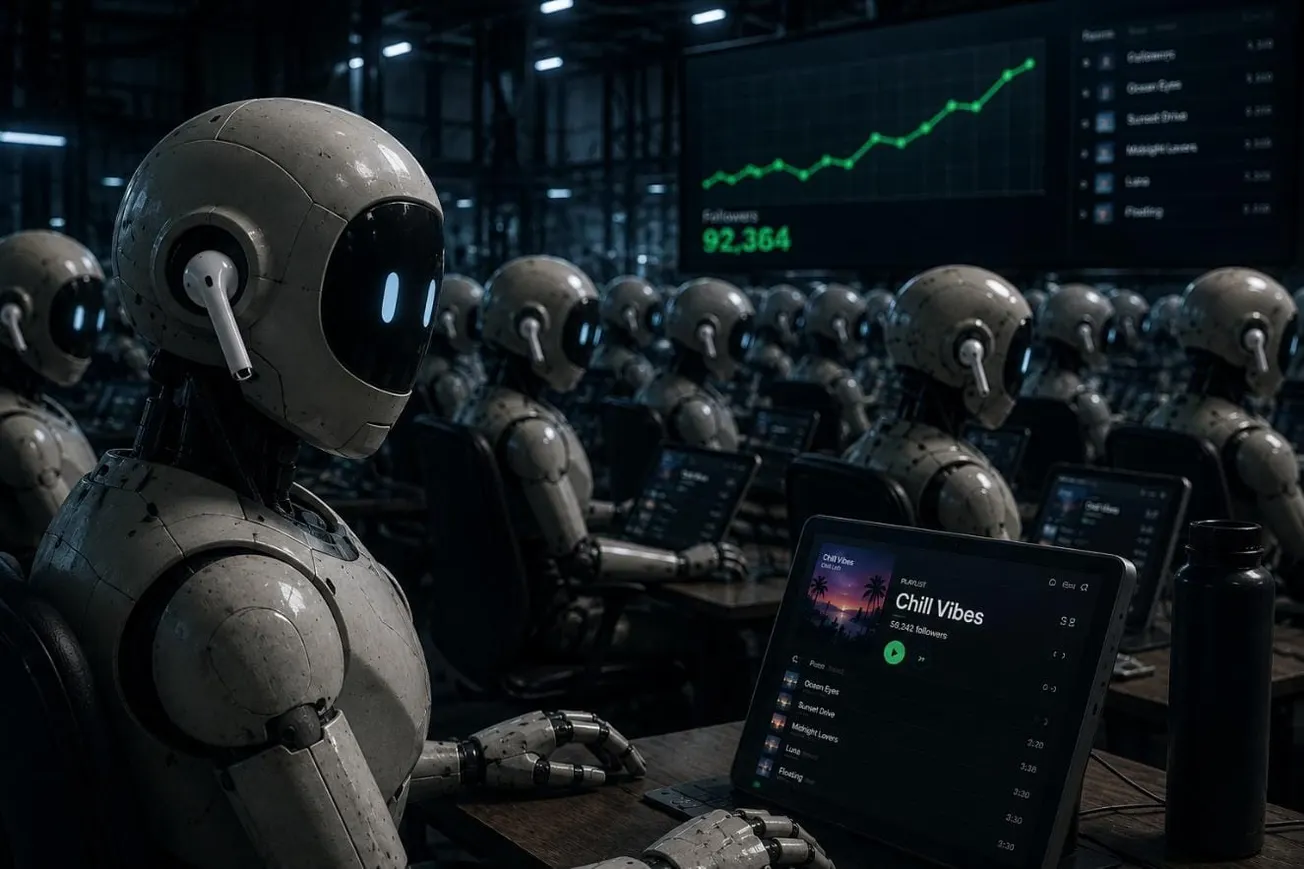
Nothing reassures a songwriter like hearing that the machine taking apart his song will be very polite about it. Spotify has spent years fighting artificial streaming. Fair enough. Fake listeners contaminate metrics, royalties, charts, and discovery. They create the appearance of attention where none exists and pull money away from artists who earned their plays honestly.
But Spotify is now inviting users to generate synthetic versions of existing songs at scale. Those may be real listeners clicking play. But the musical object being consumed is artificial, derivative, and likely to favor catalog songs that were already winning.
It seems as though Spotify is guarding against one kind of AI market distortion while monetizing another.
The Machine Is Now Inside the Gates
I have tried to be reasonable about artificial intelligence and music. The drum machine did not kill drummers. Auto-Tune did not make everyone a vocalist. AI may help somebody without studio money, session players, a producer, or four unreliable adults with matching Tuesday nights turn an idea into an actual song.
My worry has been something else.
A guy in a sweatshirt builds a band that looks real. They tour. They give interviews. The AI was trained on a voice. The singer was trained on the AI. The musicians were trained on what it spit out.
The band is real enough to sell tickets. It was just built backward. Milli Vanilli with a server rack. That was the threat I thought we were heading toward: fake artists entering the marketplace beside human ones.
But Spotify’s announcement is different. Nobody has to sneak the machine onto the platform. Now the platform itself wants to build it.
A Song Is a Pile of Decisions
There is a difference between an artist using AI as part of making a song and a streaming platform using an artist’s finished song as raw material for a new consumer product.
A song is not merely vocals, chords, drums, and tempo. It is a pile of decisions. Someone wrote the line and almost threw it away. Someone chose the vocal take that cracked because the perfect one meant nothing. Someone fought over whether the song needed another chorus or the decency to end.
At some point, the artist quits second-guessing it and lets the song go. There were other versions. This was the one they chose. Spotify now wants to sell the listener a button that says: That is nice. But what if you meant something else?
+Read more: "5 Signs a Spotify Playlist Is Fake (and How Playlist Bot Checkers Actually Work)"
A Superfan Is Not a Prompt Engineer
And apparently this is for the superfans. A superfan knows the album version from the live version, buys the record, hunts down the B-side, and can tell you where the singer’s voice catches on the line that ruins them every time. A superfan is not someone paying extra to have the artist removed from the artist’s own decisions.
I thought loving a song meant loving what somebody made. Spotify thinks loving a song means asking a machine to put a tiny hat on it.
People have always made covers and remixes. But a cover is not merely an altered product. It is a conversation. Johnny Cash did not drag “Hurt” into a prompt box and request dying American patriarch, trembling hands, please increase sorrow by 38 percent. Jimi Hendrix did not select psychedelic guitar reinterpretation from a drop-down menu next to Bob Dylan.
They heard something. They brought themselves to it. They risked embarrassment. They made choices. They left fingerprints. AI can create a variation. It cannot create the reason a human being needed to make that variation.
The Discovery Problem Is Worse
I have generally thought pulling your music from Spotify was a luxury for artists whose audiences were already large enough to follow them elsewhere. For a working artist, leaving does not punish Spotify. It makes you harder to find. Someone hears about your song, searches for you, and does not find you. The spark dies.
So I have defended staying. Spotify is flawed and powerful, but listeners are there. You cannot heroically leave before anyone learns your name. This announcement is the first thing that makes me wonder whether that position can survive. Working artists are trying to get heard in a place where more than 100,000 new songs show up every day, alongside basically the entire history of recorded music.
An artist writes a song. Records it. Pays for it. Mixes it. Masters it. Creates artwork. Sends emails. Makes social posts that feel vaguely like begging with better lighting. Maybe gets lucky enough that a human being at a radio station plays it once.
By the next morning, another hundred thousand songs have arrived. And now Spotify wants to dump AI-made covers and remixes into the same place.
We still do not know how many users will be able to make, where they will live, or whether Spotify plans to feed them into recommendations and playlists. But Spotify has said other users will be able to hear them. These are not private little experiments on a listener’s phone. They are new pieces of content entering a platform that already buries original music under impossible volume.
This Is Not Discovery. It Is Re-Consumption.
The songs best positioned for endless AI variations will be the songs people already know: songs with recognition, catalog value, and built-in attention. Their owners sit at the front of the streaming buffet while everyone else circles the parking lot holding an unplugged amp.
Spotify says this may drive discovery. Discovery of what?
Nobody fires up an AI cabaret-metal version of a song by an unknown band with 11 monthly listeners and a drummer named Derek who still owes everybody gas money. This is not discovery — this is re-consumption.
Discovery is hearing a voice you did not know existed. Discovery is a song rearranging the furniture in your skull. Spotify does not need to invent a fake new artist if it can keep listeners endlessly engaged with artificial versions of artists they already know. It can sell familiar music forever, wearing different wigs.

+Read more: "How Money Actually Flows Through the Music Industry in 2026"
Consent Is Necessary. It Is Not Enough.
Participation should be voluntary, paid, and subject to artist control. Those are the minimum requirements for avoiding outright theft. But a "properly licensed bad idea" remains a bad idea.
Consent gets complicated in the catalog-sale era. When a beloved song becomes part of an investment portfolio, who gets to decide whether it can be fed into the next platform experiment: the writer, performer, master owner, or publisher?
“Artist consent” only means much if the artist can actually say no. Otherwise, the next version of a song gets decided by whoever bought the spreadsheet. The Red Hot Chili Peppers recently sold their recorded catalog. I have no idea whether “Under the Bridge” would be eligible for this tool. The public does not know who holds which approval rights or who gets to say no. But I cannot wait for the disco-trip-hop version of “Under the Bridge,” approved by someone whose relationship to the song begins and ends with a catalog valuation model.
Small artists are told to adapt. Feed the algorithm. Make content. Engage the audience. Accept the payout. Keep swimming while someone pours concrete into the pool. The largest artists can tell Spotify that their songs are not building blocks for a premium AI toy.
A Platform That Manufactures the Flood
AI is not going away. Spotify is not going away. Artists should be allowed to use tools that help them make something honest. But this is not a new tool entering the studio. It is the platform stepping between artist and listener to sell a customized substitute. It is the platform admitting that original music already faces unbearable competition, then proposing a machine capable of multiplying derivative content built from songs that already won.
A song is not a prompt. A fan is not made more devoted by wanting less of the artist. And a streaming platform is not serving music when it starts manufacturing the flood that drowns it.
Spotify has built the machine. Now we wait to see which artists are willing to feed it.