

Is it time to hack the music industry? Many see payouts from music streaming services a generating a meager amount of revenue for artists, particularly the more obscure ones; and that some financial restructuring in the industry is needed. Here is one solution along with a radical way to help make it happen.
___________________________________
Guest post by Sharky Laguana, CEO and Founder of Bandago If you subscribe to a subscription music service such as Spotify or Apple Music you probably pay $10 a month. And if you are like most people, you probably do so believing your money goes to the artists you listen to.Unfortunately, you are wrong.The reality is only some of your money is paid to the artists you listen to. The rest of your money (and it’s probably most of your money) goes somewhere else. That “somewhere else” is decided by a small group of subscribers who have gained control over your money thanks to a mathematical flaw in how artist royalties are calculated. This flaw cheats real artists with real fans, rewards fake artists with no fans, and perhaps worst of all communicates to most streaming music subscribers a simple, awful, message: Your choices don’t count, and you don’t matter.
The Flaw in the Big Pool
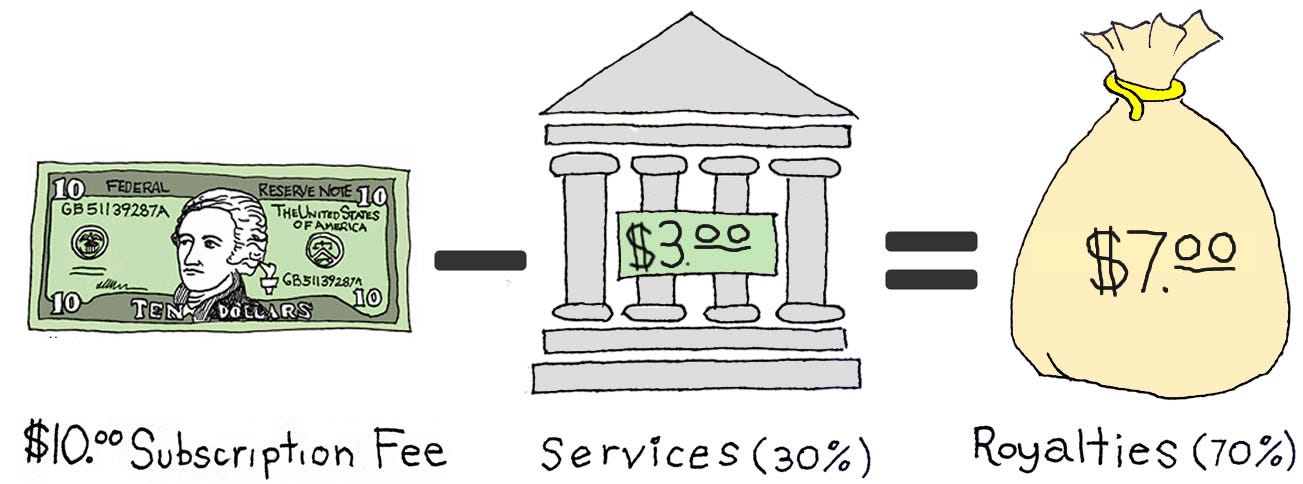
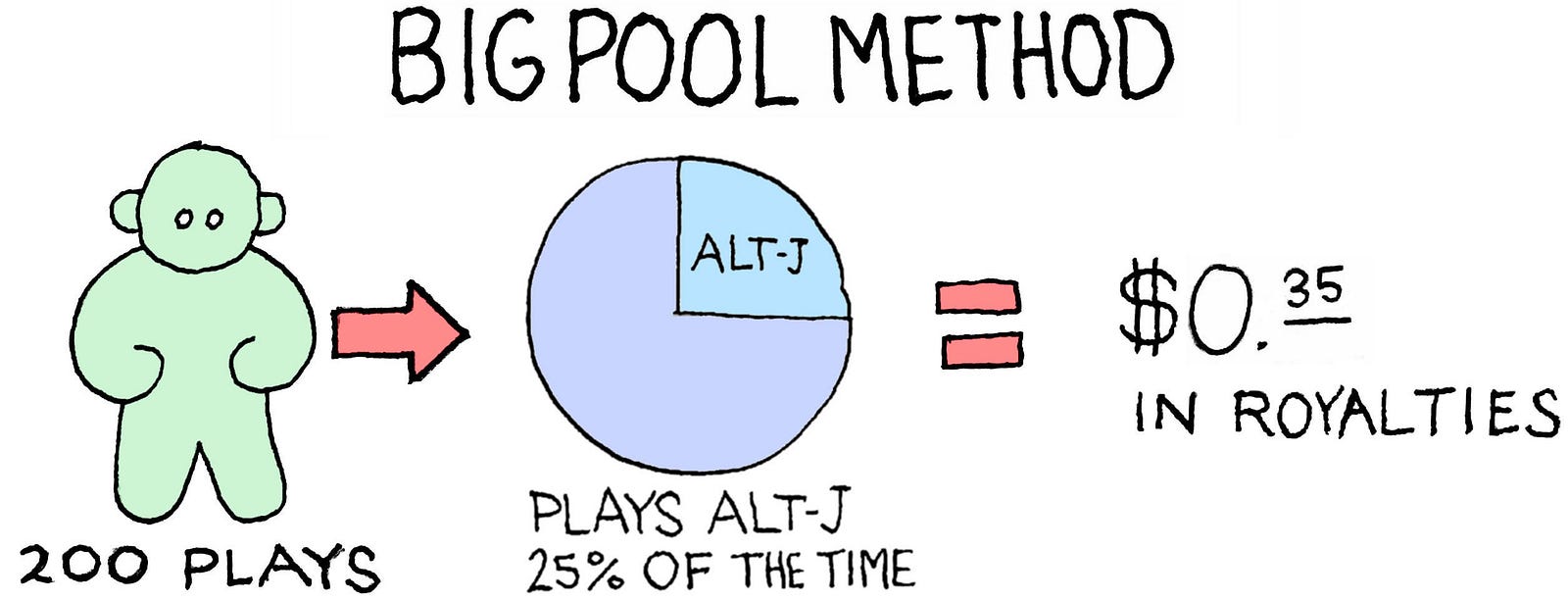
Streaming services (Spotify, Apple, etc.) calculate royalties for artists by putting all of the subscription revenue in one big pool. The services then take out 30% for themselves. The remaining 70% is set aside for royalties.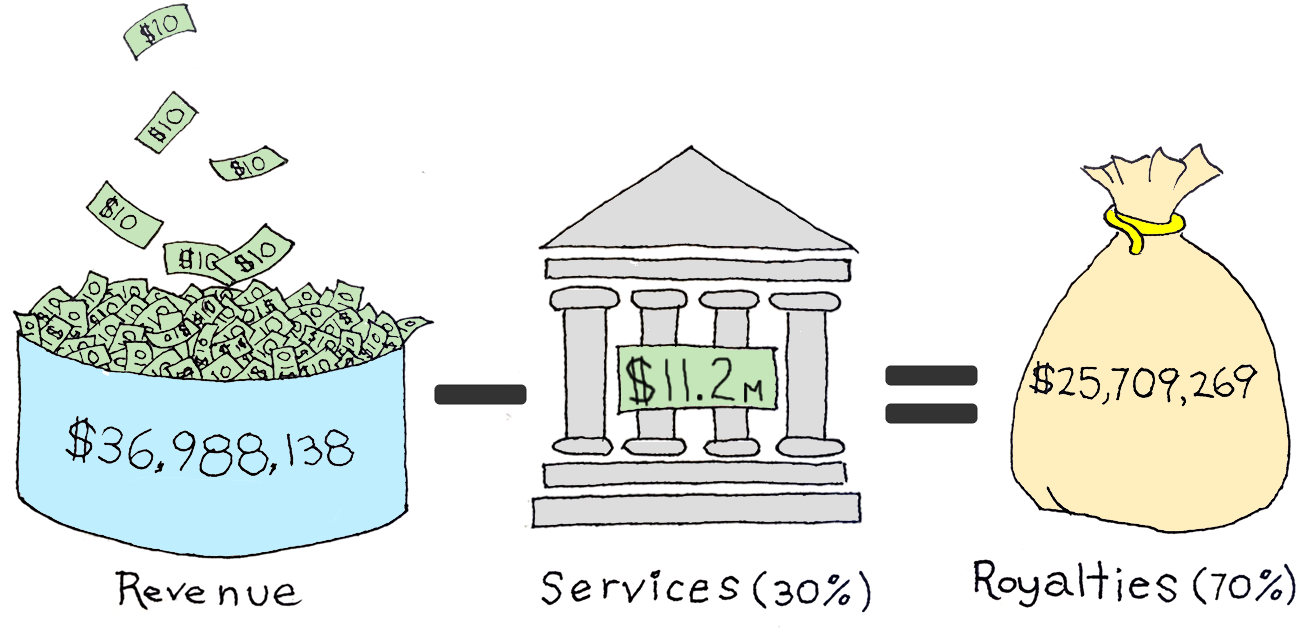
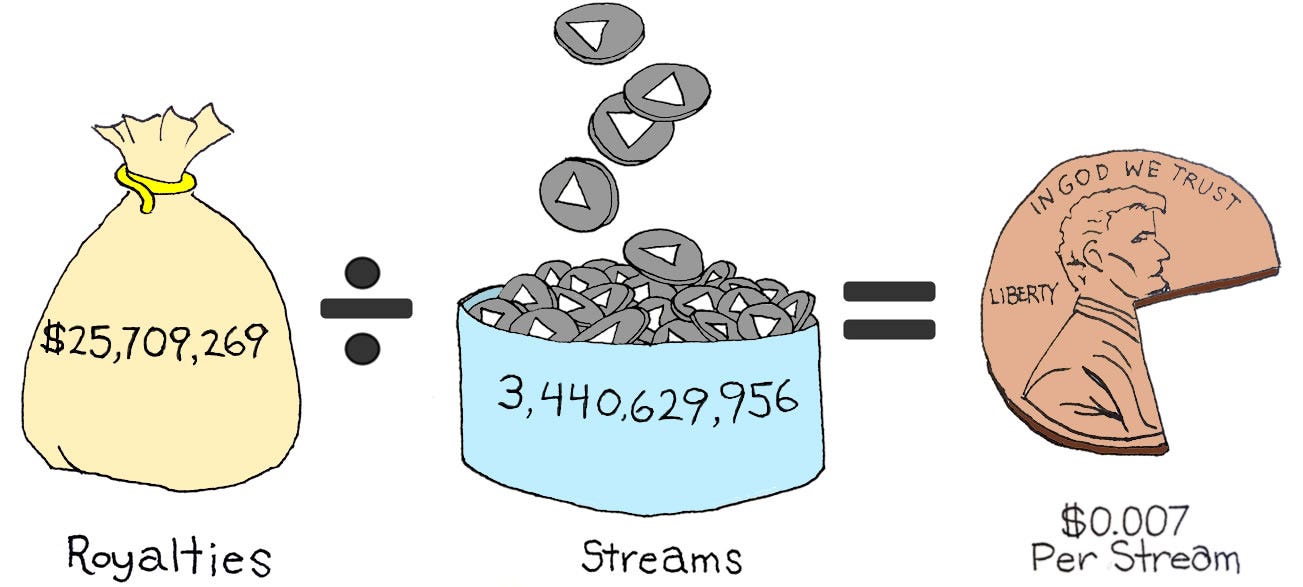
You Are Worthless
Imagine a hypothetical artist on a streaming service. Which do you think that artist would rather have: 10,000 fans who stream a song once, or one fan who streams it 10,001 times? Seems obvious, right? 10,000 fans is much better than one fan! But the Big Pool method, which only cares about the number of clicks, says the single person is worth more!So this guy…
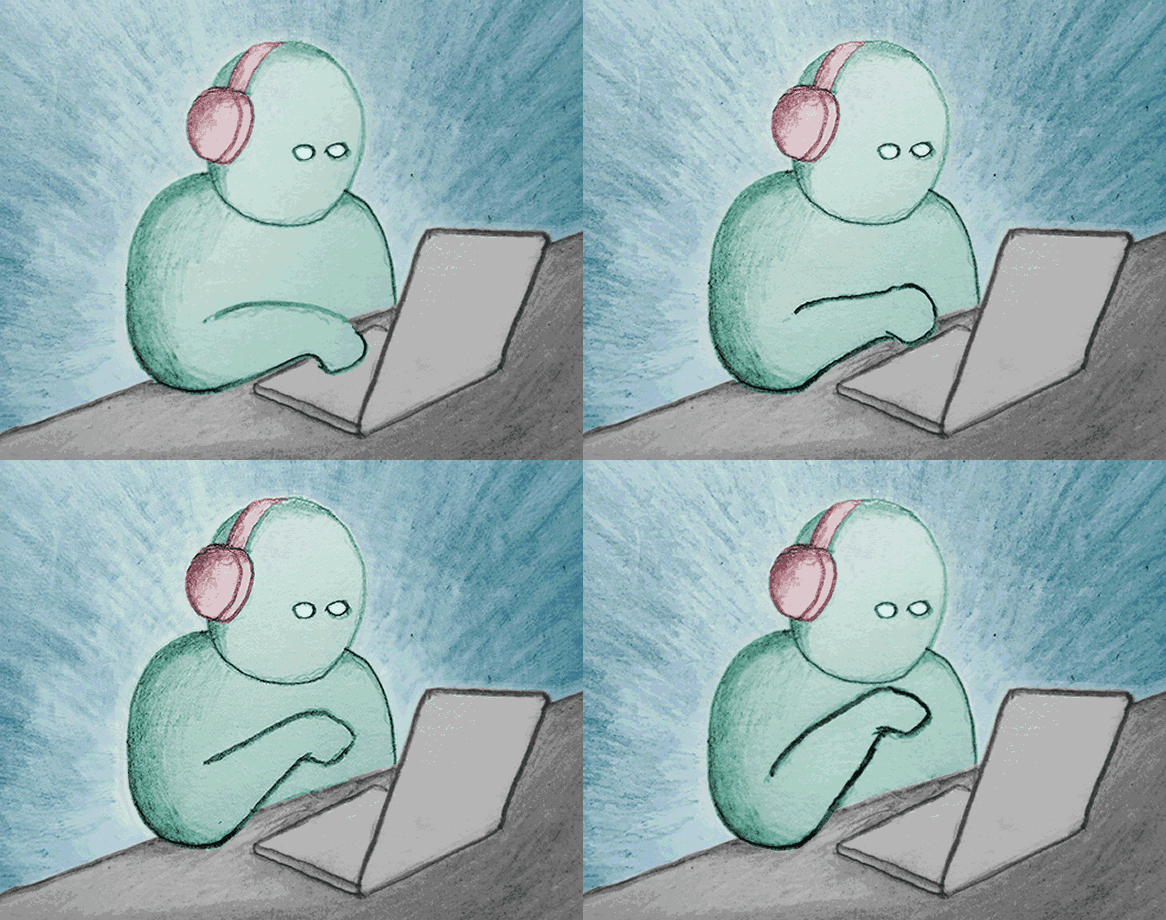
…is worth more than this huge crowd?

Ass-Backwards
This is bad for the artist, but astoundingly it’s even worse for streaming services: if each subscriber is paying $10 a month then those 10,000 subscribers would generate $1.2M in annual revenue, while the single user only generates a measly $120. Clearly the services benefit from getting more subscribers, not more streams, so why are they incentivizing streams and ignoring subscribers?Even more backwards, the Big Pool method encourages the acquisition of heavy-usage subscribers, who are the easiest customers to get and retain (in fact most “music afficianados” are already subscribers), but offers little for light-usage subscribers, who are not only the hardest customers to get and retain, but are more profitable (by not requiring as much bandwidth) and most importantly dramatically greater in number.It’s as if a car dealership paid the biggest commissions to the employees who sold the fewest number of cheap cars, and completely stiffed the employees who sold lots of expensive ones!
But Wait, It Gets Worse
If the Big Pool rewards artists who get lots of streams, major labels can sign artists who can get a lot of streams. But what if artists aren’t the only ones getting lots of streams?
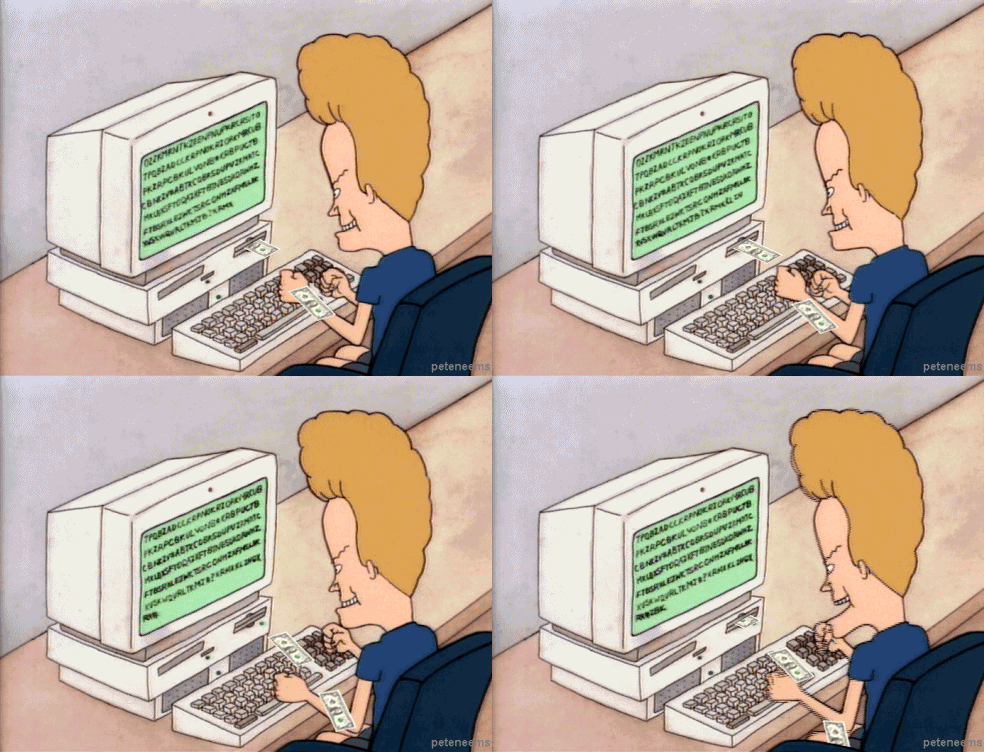
Average Does Not Mean Typical
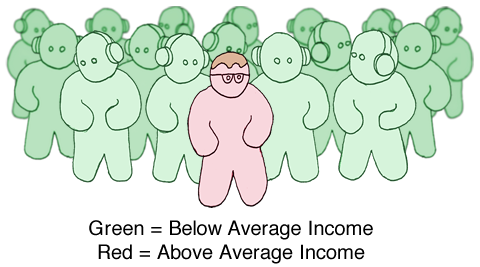
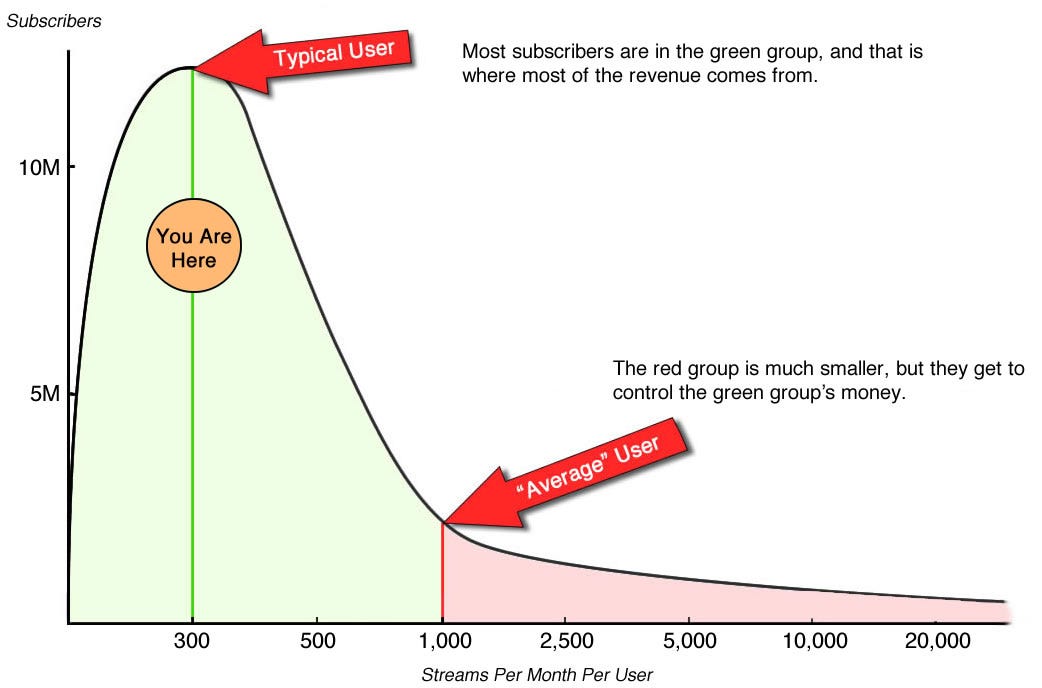
One of the most misleading words used in the streaming music industry is the word “average”. You’ll often see streaming services bragging about how their “average” user is streaming x number of hours per day, particularly when they are pitching advertisers. But don’t be fooled by the word “average” here — it’s an illusion. Average does not mean typical.Think of it this way: imagine you are in a room with a random group of people. What is the average income of everyone in the room? It’s likely that roughly half will be above average, and the other half will be below average.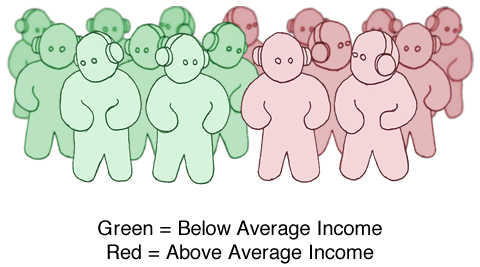
The Subscriber Share Method
There is a better way to approach streaming royalties, one which addresses all of these problems, and it’s called Subscriber Share.The premise behind Subscriber Share is simple: the only artists that should receive your money are the artists you listen to. Subscriber Share simply divides up your $7 based on how much time you spend listening to each artist. So if you listen to an artist exclusively, then that artist will get the entire $7, but if you listen less they get proportionately less.As an example, if you listen to Alt-J 25% of the time, then Alt-J would get $1.75 ($7.00 * 25% = $1.75):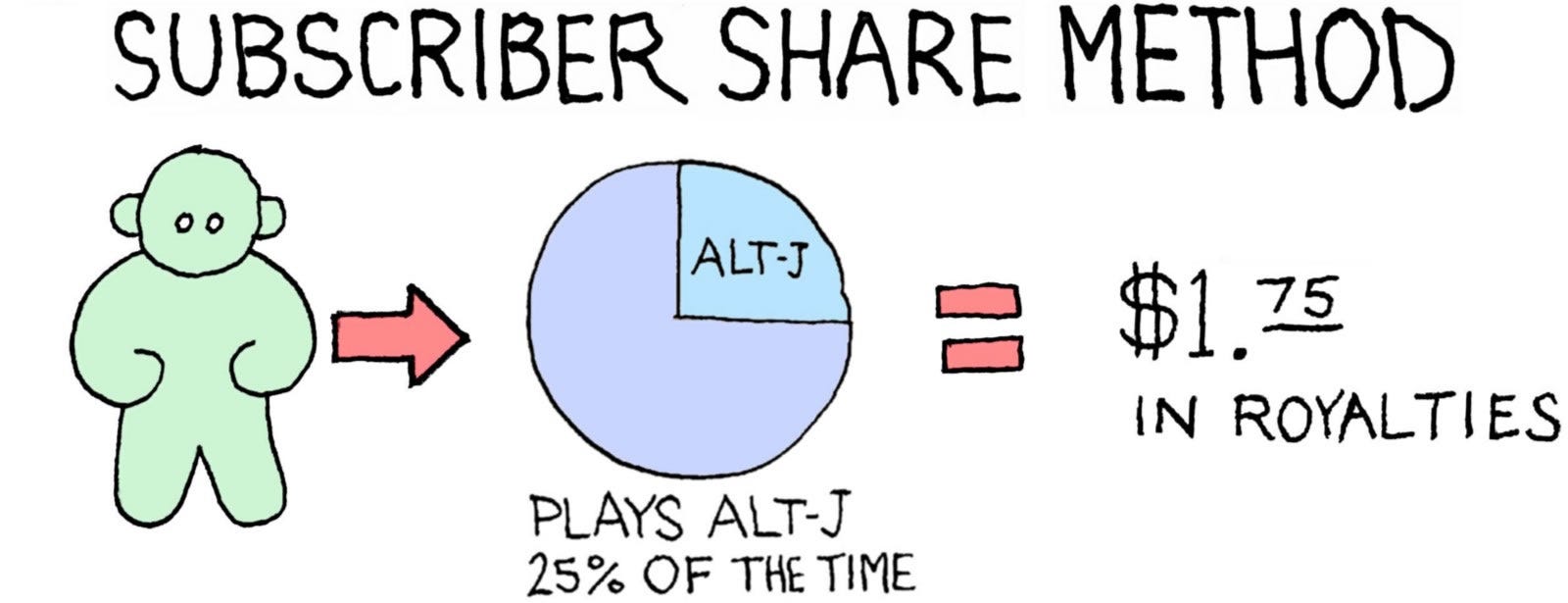
But What About Click Fraud?
A nice feature of Subscriber Share is that it is very difficult to turn a profit with click fraud: instead of turning $10 into $600, a fraudster would be turning $10 into $7, and would waste a lot of bandwidth while doing so.If the fraudster used stolen premium accounts (reducing their cost from $10 to $1 per account), they could still make as much as $6 per account, but that is nowhere near as attractive as making $600 is it? And the difficulty level to do this at scale goes way up. If the industry switched to Subscriber Share most click frauders would move to greener pastures.Mission Impossible: Minimum Wage
Subscriber Share can also be a huge benefit to small bands just starting out. If a band has a respectable fan base of 5,000 fans then they need $12.06 from every one of these fans in order to earn the federal minimum wage for four people, $60,320. In years past they would sell their fans a CD. But now under the Big Pool they need an ungodly number of streams to make minimum wage: 8.6 million streams.This means every single fan has to stream the band’s music 1,716 times. Assuming a four minute song that’s over 114 hours of listening, and if their fanbase averages 200 streams per month then that means their fans would need to listen to the band 71% of the time for an entire year!Subscriber Share only requires the fans to listen to the band 14.36% of the time, so if the typical fan averages 200 streams a month, then just 29 streams a month is sufficient, and the fan will only spend 22 hours in total listening to the band’s music. This is far more plausible for a new artist.But intriguingly, Subscriber Share also enables fans to financially support an artist using even less effort: If a band can convince their 5,000 fans to listen to them exclusively for two months, the band will earn $70k, and the fans will only have to click once each month in order to do this.
What Are We Waiting For?
It boils down to two big obstacles: fear, and inertia.To be fair, the music industry has been on the wrong end of the economic stick for well over a decade now, and talking about changing royalty methods just as it seems like things are about to get better is understandably scary.The other problem is inertia. Institutions hate change, it’s expensive and hard, and you have to rethink everything attached to that change. Inevitably various special interests will arise and fight for the status quo. It can be very tricky to overcome their objections.So it is difficult for the music industry to change, even when they know it’s in their best interest. They are like a cat stuck in a tree. They got themselves up, and can’t figure out how to get down.
A Silent Protest This September
A critical aspect of streaming music services is that the services can’t tell if the volume is turned down. If the music is playing the “clicks” still count, even if no one is listening. This can be used to our advantage.Normally a typical subscriber can’t keep up with heavy users, in part because many of these heavy users aren’t even individuals to begin with: they’re actually offices, hair salons, gyms, yoga studios, and restaurants. But if typical subscribers streamed music 24/7, and just turned the volume down when they weren’t listening, then maybe they could catch up!And if these silent protestors streamed strictly independent artists, major labels would have to worry about the value of their streams decreasing! That could be enough to persuade them to reconsider the use of the Big Pool method, and if the major labels jump out of the Big Pool tree, the rest of the music industry will follow.Even a small number of people engaging in this silent protest will have a measurable impact: just doing it for one day will double most people’s monthly consumption, and doing it for one week will result in more streams than a typical subscriber consumes in a year! But obviously the more the merrier. So let’s throw the idea out there and see what happens:For the month of September, let’s stream indie bands 24/7 non-stop, with the volume turned down to zero.
Note: It’s recommended that you change your selected indie artist on a daily basis (or even better, use playlists with multiple artists), so that you aren’t mistaken as a bot by the services.If this works the music industry will be forced make royalties fair(er) for all musicians and fans. If it fails a couple of indie bands will get a bigger check than usual. What have we got to lose by trying?Sharky Laguana is
CEO & founder of @Bandago (van rental with fun stuff), father of two boys, ping pong enthusiast. Previously: guitarist & songwriter for @creeperlagoonRelated articles